

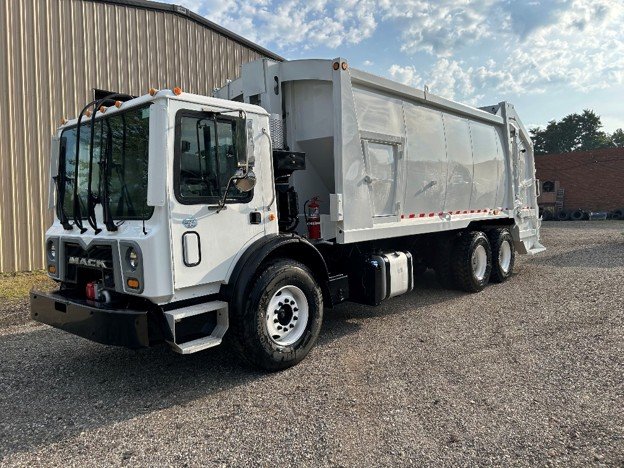
Choosing the right refuse truck is an important decision for municipalities, private waste haulers, and commercial collection companies. The vehicle must match the type of waste being collected, the containers used by customers, the conditions of the route, and the fleet’s maintenance capabilities. A truck that performs well in one application may not be the most practical option for another.
McNeilus refuse trucks are available in different configurations designed to support varied waste collection requirements. Understanding the differences between front loaders, rear loaders, and side loaders can help fleet managers make more informed purchasing decisions and build a fleet that supports reliable service.
Start With the Collection Application
Before comparing individual trucks, fleet managers should define the work the vehicle will perform. Commercial collection often involves large containers at retail centers, offices, restaurants, and industrial properties. Residential collection may involve smaller carts distributed along neighborhood streets. Some routes include mixed conditions, while others focus on specific waste streams or customer types.
The collection method determines which truck configuration is likely to be suitable. Managers should consider container design, expected load weight, pickup frequency, route length, available space, and the number of stops completed during a typical shift.
It is also important to review future demand. A business expecting to add customers or expand into new service areas may need more flexibility than a fleet serving stable routes. Choosing equipment with the right capabilities can help avoid unnecessary costs and operational limitations.
McNeilus Front Loader Refuse Trucks
Front loaders are commonly associated with commercial waste collection. They use a front-mounted lifting arrangement to raise compatible containers and transfer their contents into the refuse body. This method can be practical for scheduled collection at businesses and other properties where containers are accessible to front-loading vehicles.
For companies evaluating a McNeilus front loader, the Atlantic Series and Meridian are two models worth comparing. The Atlantic Series emphasizes heavy-duty performance, while the Meridian is designed to balance strength and versatility with a lighter-weight configuration. Exact capabilities depend on the selected model and specifications.
A front loader may be suitable for routes with larger commercial containers, but managers must verify container compatibility, lifting requirements, vehicle dimensions, and payload limits. Site access should also be considered, particularly where loading areas have overhead obstructions, restricted turning space, or heavy traffic.
When a Rear Loader May Be More Suitable
Rear loader refuse trucks are often used for residential and light commercial collection. Their loading arrangement supports collection applications where waste is loaded at the rear of the vehicle. Different configurations may include cart tippers, container-handling options, or other features designed around the route’s requirements.
For operators serving residential neighborhoods, a rear loader may provide a practical approach to collecting waste from carts and compatible containers. Commercial fleets may also consider rear loaders where their customers and waste volumes match the vehicle’s capabilities.
McNeilus offers multiple rear loader configurations, including options designed for different compaction and collection needs. Fleet managers should compare capacity, loading equipment, maintenance requirements, and the type of waste handled before selecting a model.
Considering Side Loader Options
Side loader refuse trucks can be useful for routes designed around side-loading collection. Depending on the model, these vehicles may support automated or other specialized collection methods that reduce the need for manual handling during routine pickups.
The suitability of a side loader depends on the collection system, container placement, street layout, and operating procedures. Routes must be planned so the truck can approach containers correctly and complete collections without creating unnecessary hazards or delays.
Fleets considering side loaders should examine the level of automation, operator training requirements, maintenance needs, and compatibility with existing customer containers. The best choice is the one that works with the actual collection environment rather than simply offering the most technology.
Comparing Capacity, Maneuverability, and Payload
Capacity is an important consideration, but it should not be the only factor in a purchasing decision. A truck with a larger body may be useful for certain high-volume routes, while a lighter configuration may offer advantages where vehicle weight and payload efficiency are important.
Managers should distinguish between body volume, lifting capacity, and legal payload. These are different measures, and the appropriate specifications depend on the vehicle and its intended use. A truck must comply with applicable weight limits while safely handling the containers and waste encountered on the route.
Maneuverability is equally important. Narrow streets, crowded commercial areas, tight loading bays, and restricted entrances can affect how easily a vehicle completes its work. Before purchase, fleets should compare truck dimensions with real route conditions and confirm that drivers can position the vehicle safely.
Evaluating Maintenance and Total Ownership Costs
Purchase price provides only part of the financial picture. A fleet must also account for scheduled servicing, replacement parts, labor, tires, fuel or energy, insurance, training, and potential downtime.
A vehicle that is inexpensive to buy may become costly if it does not suit the route or requires frequent repairs. Similarly, a more expensive configuration may offer value when its capabilities closely match the work and the fleet can support it properly.
Fleet managers should review maintenance access, component availability, service requirements, and warranty terms. They should also consider whether technicians and operators have the training needed to maintain and use the equipment correctly.
The Importance of Parts and Service Support
Parts availability and technical assistance can influence how quickly a truck returns to service after a repair. This is particularly important for waste collection fleets operating on fixed schedules, where an unavailable vehicle may disrupt multiple customer pickups.
Ten-8 Industrial supports McNeilus refuse truck customers with parts and service resources, including refuse body diagnostics, hydraulic system repairs, and mobile service capabilities. Fleet managers can discuss their selected truck configuration and service needs to understand which resources are available for their operations.
Establishing service contacts before a breakdown occurs can improve preparation. Keeping vehicle details, maintenance records, and information about recurring problems organized can also help technicians diagnose issues more efficiently.
Matching Equipment to Long-Term Fleet Goals
The right refuse truck should support both current and future operational needs. Fleet managers may want to standardize certain configurations to simplify training and maintenance, or maintain a mix of vehicle types to serve different customers.
Future considerations may include changing collection contracts, stricter environmental requirements, electric vehicle options, and new technology. These factors should be assessed realistically, based on route demands, charging or fueling infrastructure, service access, and total cost of ownership.
No single truck configuration is ideal for every waste collection application. Comparing real operating requirements against the capabilities of each model provides a stronger foundation for making a purchase decision.
Conclusion
McNeilus refuse trucks offer different configurations for commercial, residential, and specialized collection work. Front loaders can suit compatible commercial container routes, rear loaders may support residential and light commercial collection, and side loaders can serve routes designed around side-loading methods.
By comparing capacity, maneuverability, maintenance, container compatibility, and service support, fleet managers can select equipment that fits their needs. With planning and support from providers such as Ten-8 Industrial, waste collection companies can make practical decisions focused on reliability, productivity, and long-term operating value.
About the Author


